
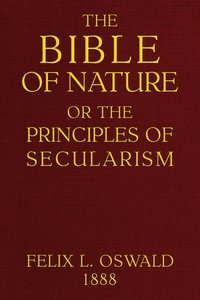
The Bible of nature : or, The principles of secularism. A contribution to the…
Published in 1889, Felix L. Oswald's The Bible of Nature is a passionate argument for a worldview he calls Secularism. This isn't a story with characters and a plot in the traditional sense. Instead, think of it as a blueprint for a different way of living. Oswald builds his case piece by piece, presenting nature and science as the ultimate sources of truth and moral guidance, replacing the need for religious scripture.
The Story
There's no narrative arc here. The 'story' is the unfolding of Oswald's philosophy. He starts by questioning the authority of traditional religion, suggesting it often conflicts with scientific discovery. Then, he proposes his alternative: Secularism. He walks the reader through how observing the natural world—from animal behavior to physical laws—can teach us about cooperation, honesty, and our place in the universe. He argues that human happiness and social progress come from reason, education, and a deep appreciation for the tangible world around us, not from fear of divine punishment or hope for an afterlife. The book is his attempt to construct a complete, satisfying, and ethical life philosophy from the ground up, without a god.
Why You Should Read It
I found this book incredibly bold for its time. Oswald writes with a fiery conviction that's contagious. You can feel his frustration with what he saw as superstition holding society back, and his genuine awe for scientific progress. It's less a dry philosophical text and more a rallying cry. Reading it today, it feels surprisingly relevant. Many of his arguments about using evidence over faith, and finding ethics in human well-being, echo in modern humanist and atheist discussions. It's a powerful reminder that the debate between science and religion, and the search for a non-religious morality, has been raging for a very long time.
Final Verdict
This book is perfect for history buffs, anyone interested in the evolution of free thought, or readers who enjoy seeing where modern ideas come from. It's not an easy beach read—it requires some focus—but it's a compelling primary source. If you've ever read Carl Sagan or modern humanist writers and wondered about their intellectual ancestors, Felix L. Oswald is a fascinating figure to meet. Approach it as a historical document and a passionate personal argument, and you'll find a lot to think about.
This publication is available for unrestricted use. Feel free to use it for personal or commercial purposes.
Christopher Garcia
1 year agoI stumbled upon this title and the depth of research presented here is truly commendable. Exceeded all my expectations.
Oliver Hernandez
2 years agoEnjoyed every page.
Christopher White
1 year agoI stumbled upon this title and the plot twists are genuinely surprising. Absolutely essential reading.
Carol Williams
1 year agoTo be perfectly clear, the narrative structure is incredibly compelling. I learned so much from this.





William Thomas
1 year agoThe fonts used are very comfortable for long reading sessions.