eBooks
96 Books foundExploring the IYIQE Public Domain Literature Library
The IYIQE Public Domain Literature Library offers 96 works drawn from Project Gutenberg, providing readers with a curated selection of public-domain texts that range from political pamphlets and literary criticism to travel sketches and satirical verse. This catalogue is designed to help readers navigate these works by grouping them into four thematic categories, each presented with a guide that explains the connections among the books and offers starting points for exploration.
Browsing the Catalogue
Readers may browse the library by category or by individual book records. Each book page provides the title, author, digital source (Project Gutenberg), a set of keywords, a target-reader description, and a catalogue note that outlines the work's content and context. The categories serve as navigation aids, grouping works that share a thematic focus while acknowledging that individual books may also resonate across categories.
For example, The Communist Manifesto appears under "Historical Psychological Social Fiction" but also informs the political writings in "Adventure Picaresque Fiction." Readers are encouraged to follow connections across categories using the internal links provided in each guide.
Categories and Their Scope
The library contains four categories:
- Adventure Picaresque Fiction – works that examine historical developments, political ideas, and cultural transformations.
- Fantasy Juvenile Worlds – travel writing, nature observation, and portraits of place.
- Science Fiction Utopias – essays and treatises on criticism, aesthetics, and intellectual life.
- Historical Psychological Social Fiction – studies of social structures, customs, and cultural commentary.
These categories are not rigid; they are intended to suggest reading paths rather than definitive literary judgments.
Source Attribution
All works in the catalogue are sourced from Project Gutenberg, a digital library of public-domain texts. Each book record includes the original publisher information as supplied by Project Gutenberg, along with the author details and copyright status. The catalogue does not assert any additional editorial rights or certifications beyond those inherent in the public-domain texts.
Three Practical Reading Paths
For readers new to the library, the following paths offer focused entry points:
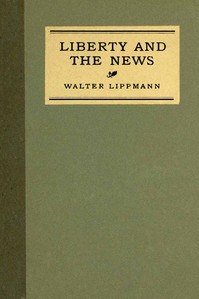
- Political and Social Thought: Begin with The Communist Manifesto (Marx and Engels), then move to Culture and Anarchy (Matthew Arnold), and finally Liberty and the News (Walter Lippmann) to trace a line of social critique from the 19th century to the 1920s.
- Nature and Place: Start with The Open Air (Richard Jefferies), continue with Hodge and His Masters (also Jefferies), and explore Where the Sabots Clatter Again (Katherine Shortall) for a shift from rural England to post-war France.
- Literary Criticism and Humor: Read Twelve Types (G. K. Chesterton) for biographical essays, An Essay on Criticism (Alexander Pope) for verse criticism, and finish with Bill Nye's Sparks (Bill Nye) for satirical relief.
Bibliographic dates and catalogue measurements
The catalogue distinguishes the Project Gutenberg digital release from a work’s original or first publication. Project Gutenberg is identified as the digital source for the edition available here; its release year is therefore shown as Gutenberg Release Year, not as the work’s original publication year.
When an explicit first-publication or issue date can be supported directly by the title or issue information, it may be shown separately as First Publication Year. When that date cannot be confirmed, the catalogue displays Not confirmed rather than guessing a year.
Where the source text can be measured reliably, the catalogue may provide word count and estimated reading time. These measurements describe reading scope and are not quality rankings.
The current catalogue contains 4 active subject categories: Adventure Picaresque Fiction, Fantasy Juvenile Worlds, Science Fiction Utopias, and Historical Psychological Social Fiction. Categories are browsing aids and may overlap where a work reasonably fits more than one subject.
- Featured