
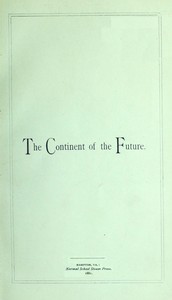
The Continent of the Future: Africa and Its Wonderful Development by Coppinger
Published in 1886, this isn't a story with characters and a plot. Think of it as a guided tour of Africa's future, as seen through the eyes of a 19th-century enthusiast. William Coppinger takes the reader on a journey across the continent, region by region. He describes the landscapes, resources, and people as they were known (or imagined) at the time. Then, he launches into his grand vision. He predicts a network of railroads and steamships, the rise of mining and agriculture on an industrial scale, and the transformation of 'wilderness' into prosperous, connected territories. The central thread is his absolute belief in progress, defined by European technology and settlement, and his conviction that this path will bring wealth and civilization to Africa.
Why You Should Read It
This book is a powerful piece of historical context. It's not a dry history text; it's someone's passionate, real-time argument. Reading it, you feel the excitement of the 'Scramble for Africa' era. Coppinger's writing bursts with the optimism of a man who believes technology and European enterprise can solve everything. That's what makes it so insightful—and so uncomfortable. You see the roots of colonial thinking laid bare: the assumption that development must follow a European model, the casual stereotypes about African societies, and the unshakable faith in a manifest destiny for European powers.
It forces you to compare two futures: the one Coppinger dreamed of, and the one that actually happened. His predictions about infrastructure and economic potential sometimes feel oddly prescient, but they are completely wrapped up in a political and social framework we now recognize as deeply flawed. It's a stark reminder that ideas about 'progress' are never neutral.
Final Verdict
This book is perfect for history buffs, students of colonialism, or anyone interested in how the past imagined tomorrow. It's not an easy, relaxing read, but it's a short and incredibly thought-provoking one. Don't read it for an accurate picture of Africa. Read it to understand the mindset that shaped so much of the modern world. It's a primary source that speaks volumes about the ambitions, blind spots, and complex legacy of the 19th century. Approach it with a critical mind, and you'll find it's one of the most revealing books about its era that you could pick up.
The copyright for this book has expired, making it public property. Thank you for supporting open literature.
Elijah Nguyen
1 year agoThe formatting on this digital edition is flawless.
Ethan Rodriguez
10 months agoAfter finishing this book, the flow of the text seems very fluid. Worth every second.
Lucas Walker
4 months agoI had low expectations initially, however the narrative structure is incredibly compelling. Absolutely essential reading.
Linda Miller
1 year agoBeautifully written.






James Davis
1 year agoAmazing book.