
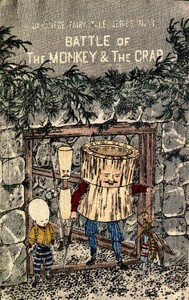
Battle of the Monkey & the Crab by Anonymous
So, here's the deal. A monkey and a crab are walking along when they find a rice ball. The crab gets it, but the sly monkey convinces him to trade it for a single persimmon seed, promising it'll grow into a whole tree. The crab, being a decent sort, plants the seed, cares for it, and sure enough, it grows tall and bears fruit. The problem? The crab can't climb. He asks his old 'friend' the monkey for help picking the persimmons. The monkey agrees, but once he's up in the tree, he starts eating all the ripe, sweet fruit himself, hurling only the hard, green ones down at the crab. When the crab complains, the monkey gets angry and beats him with a heavy unripe persimmon, badly hurting him.
The Story
The story shifts from a simple trick to a full-on revenge mission. The crab's children are furious and vow to get back at the monkey. They don't try to fight him alone. Instead, they recruit a team of household items and creatures who have also been wronged or understand injustice: a sharp chestnut, a stinging bee, and a heavy wooden mortar. Together, they hatch a clever plan. They lie in wait in the crab's house. When the monkey comes by, pretending to check on the 'sick' crab, each ally attacks in turn—the chestnut burns him, the bee stings him, the mortar falls on him. It's a coordinated assault that leaves the monkey defeated and running for his life, learning a harsh lesson about bullying and betrayal.
Why You Should Read It
What gets me about this tale isn't the fantasy, but the raw feeling behind it. It's not about good versus evil in a grand way; it's about the anger you feel when someone powerful takes advantage of you. The crab isn't a warrior. He's a parent, a neighbor, someone who trusted a deal and got crushed for it. His allies aren't magical knights. They're everyday things, showing that justice sometimes comes from cleverness and community, not just strength. The monkey is a fantastic villain—not a monster, but a selfish, opportunistic creature we all recognize. It's a story that understands the desire for payback and frames it as a collective effort against a bully.
Final Verdict
This is a perfect, quick read for anyone who loves folktales that don't sugarcoat life. It's for people who enjoy stories where the underdog wins through wit and teamwork. If you like Aesop's fables but wish they had a bit more action and a clearer villain, you'll get a kick out of this. It's also a great one to read and discuss with older kids—it sparks real conversations about fairness, keeping promises, and how to stand up for yourself. Don't go in expecting a gentle bedtime story. Go in expecting a short, sharp, and satisfying lesson, wrapped up in a very unusual battle.
This text is dedicated to the public domain. Access is open to everyone around the world.
Susan Taylor
7 months agoHaving explored several resources on this, I find that the level of detail in the second half of the book is truly impressive. A perfect balance of theory and practical advice.
William Thompson
2 months agoI was particularly interested in the case studies mentioned here, the way it handles controversial points with balance is quite professional. I’ll definitely be revisiting some of these chapters again soon.
Amanda Hill
1 year agoI didn't expect much, but the clarity of the writing makes this accessible. Exceeded all my expectations.
Charles Smith
3 months agoGood quality content.



Paul Anderson
1 year agoGiven the current trends in this field, it addresses the common misconceptions in a very professional manner. It’s a comprehensive resource that doesn't feel bloated.