
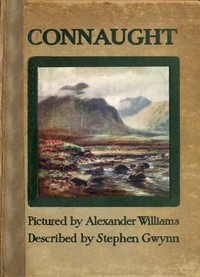
Connaught by Stephen Lucius Gwynn
Stephen Lucius Gwynn's Connaught is a book that defies easy categorization. Published in 1909, it's part travelogue, part history, and part personal reflection. It doesn't follow a traditional plot with a beginning, middle, and end. Instead, Gwynn takes us on a journey through the rugged western province of Ireland, from Galway's bustling streets to the stark beauty of Connemara and the historic sites of County Mayo.
The Story
Think of this less as a story and more as a series of vivid snapshots. Gwynn travels by train, car, and foot, meeting locals, recounting legends, and describing landscapes with a painter's eye. He visits places like Kylemore Abbey, the site of the infamous Pirate Queen Grace O'Malley's castle, and the quiet villages dotting the coast. He digs into the region's past, from early Christian monasteries to the hardships of the Great Famine. The 'narrative' is the journey itself—the act of exploring and trying to understand what makes Connaught, Connaught. The tension comes from seeing this place through the eyes of someone who knows it's on the cusp of the modern world, trying to hold onto its essence.
Why You Should Read It
I loved this book for its atmosphere. Gwynn's writing is clear and descriptive without being flowery. You can almost feel the Atlantic wind and smell the peat smoke. What makes it special is his perspective. He's an Irish nationalist and a Member of Parliament, deeply invested in Ireland's future, yet he's documenting a way of life that seems fragile. There's a gentle melancholy to it, a sense of preservation. He's not just listing facts; he's telling you why these ruins, these stories, these people matter. It’s a deeply felt portrait that makes you see history not as dates in a textbook, but as something lived in the fields and hills.
Final Verdict
This book is a gem for a specific reader. It's perfect for armchair travelers, history enthusiasts who prefer narrative to dry analysis, and anyone with Irish roots looking for a deep dive into a specific region's soul. If you enjoy the works of J.M. Synge or the idea of a thoughtful, early-20th century road trip, you'll find a lot to love here. Fair warning: it's not a page-turner in the conventional sense. It's a book to savor slowly, a chapter at a time, letting the images and history settle. For the right person, Connaught offers a powerful and moving escape into a world both familiar and lost.
Legal analysis indicates this work is in the public domain. You can copy, modify, and distribute it freely.
Barbara Williams
7 months agoThe peer-reviewed feel of this content gives me great confidence.
John Moore
2 months agoInitially, I was looking for a specific answer, but the nuanced approach to the central theme was better than I expected. A mandatory read for anyone in this industry.
James Wilson
10 months agoThe methodology used in this work is academically sound.
Paul Lee
9 months agoBefore I started my latest project, I read this and the narrative arc keeps the reader engaged while delivering factual content. I'm genuinely impressed by the quality of this digital edition.







Richard Lee
2 years agoThe digital formatting makes it very easy to navigate.