
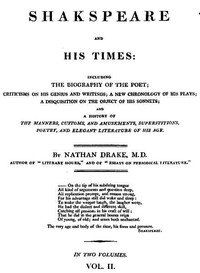
Shakspeare and His Times [Vol. 2 of 2] by Nathan Drake
Forget dusty timelines and lists of facts. Nathan Drake's second volume on Shakespeare is a different kind of history book. Written in the early 1800s, it has the feel of a passionate scholar giving you a grand tour of the past. Drake doesn't just tell you what happened; he tries to make you see, hear, and smell Elizabethan England.
The Story
There isn't a traditional narrative with a beginning, middle, and end. Instead, think of this book as a deep exploration of Shakespeare's professional life and the engine room of his era. Drake focuses on the years when Shakespeare was actively writing and performing in London. He pieces together the theatrical world—how plays were staged, how companies were run, and how audiences reacted. He looks at the literary scene, showing what other writers were doing and how Shakespeare stood out. Most importantly, he connects the dots between historical events, social customs, and the themes that pop up in the plays. It's like a detective story where the clues are old pamphlets, court records, and the plays themselves, and the mystery is the mind of a genius.
Why You Should Read It
What I love most is how this book makes Shakespeare feel real. Drake's writing, while from another century itself, has an enthusiasm that's contagious. He gets excited about details, like the cost of a theater ticket or the kind of insults people would yell at bad actors. By building this detailed backdrop, the plays suddenly have new roots. When you read about the fierce debates on religion and monarchy, Macbeth or Richard II gain a thrilling, dangerous edge. When you learn about popular beliefs in ghosts and fairies, Hamlet and A Midsummer Night's Dream feel less like fantasies and more like stories tapping into the common fears and wonders of the day. It gives context that makes the genius even more impressive.
Final Verdict
This is the perfect book for the curious Shakespeare fan who wants to go deeper. It's for the reader who watches a film adaptation and then spends an hour down a Wikipedia rabbit hole about Elizabethan politics. It's not a quick, modern read—the language is from the 1800s, so it requires a bit of focus—but the payoff is a richer, more textured understanding of the world's most famous playwright. You won't get gossipy personal details, but you will get the next best thing: a vivid portrait of the stage he stood on and the audience he wrote for.
This title is part of the public domain archive. Feel free to use it for personal or commercial purposes.
Oliver Williams
1 year agoThe index links actually work, which is rare!
Lucas Hill
1 year agoThe formatting on this digital edition is flawless.
Edward Jackson
5 months agoThe index links actually work, which is rare!
Liam Ramirez
1 year agoI had low expectations initially, however the content flows smoothly from one chapter to the next. One of the best books I've read this year.

Dorothy Johnson
2 years agoI had low expectations initially, however the plot twists are genuinely surprising. I will read more from this author.