
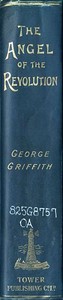
The Angel of the Revolution: A Tale of the Coming Terror by Griffith
Let's set the scene: it's 1903, but not the one from our history books. The world is on the brink of a massive war between the great empires. Enter the 'Brotherhood,' a hidden network of anarchists, socialists, and visionary scientists led by a mysterious figure known only as the Master. They've been quietly building a terrifying advantage: a fleet of advanced, propeller-driven airships called 'aerostats,' armed with bombs and lightning guns.
The Story
The plot kicks off with Richard Arnold, a down-on-his-luck engineer who has invented a revolutionary new engine. The Brotherhood recruits him to perfect their airships. What follows is a globe-trotting mission as this secret army uses its air power to intervene in the great war, systematically destroying the armies and fleets of Russia, Britain, and Germany. They don't just want to win a battle; they aim to smash the old world completely and build a new, peaceful global society from the ashes. It's a story of spectacular aerial warfare, last-minute rescues, and political upheaval on a scale that must have seemed utterly breathtaking to readers in the 1890s.
Why You Should Read It
Reading this is like finding a time capsule of both fear and hope. Griffith was writing at the peak of British imperial power, yet he imagined it all crumbling in the face of a new, unstoppable technology. The 'aerostat' battles are the clear highlight—you can see the direct line from this book to every sci-fi dogfight ever written. But what really sticks with me is the moral puzzle at its heart. The Brotherhood are the heroes, but their methods are brutal. They believe the ends justify the means in the most absolute way. It makes you think about revolution, progress, and whether true peace can ever be born from so much violence. The characters serve the plot, but the ideas they wrestle with are huge and surprisingly modern.
Final Verdict
This book is a must for anyone who loves the roots of science fiction. It's perfect for fans of early adventure writers like H. Rider Haggard or the scientific romances of H.G. Wells, but who want something with more explosions and global stakes. It's also a fascinating read for history nerds, as it shows exactly what a late-Victorian mind thought the next century's wars would look like (hint: it involves a lot of airships). Just be ready for a story that moves at a breakneck pace and isn't afraid to be utterly, wonderfully over-the-top. It's a forgotten classic of 'what-if' fiction that deserves a fresh look.
This text is dedicated to the public domain. It is available for public use and education.
Lisa Lee
1 year agoI have to admit, the arguments are well-supported by credible references. One of the best books I've read this year.
Ava Davis
1 year agoCitation worthy content.
Kimberly Walker
2 years agoAs someone who reads a lot, it creates a vivid world that you simply do not want to leave. I would gladly recommend this title.
Jessica Hernandez
1 year agoHelped me clear up some confusion on the topic.



Michael Miller
1 year agoI particularly value the technical accuracy maintained throughout.