About 251 minutes
Memoirs of My Life and Writings — Reading Notes
Science Fiction Utopias
57,673 recorded words. 10 minutes difference from this book's estimate.
View Gutenberg source #6031
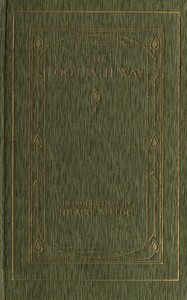
The source record for The Footpath Way: An Anthology for Walkers — Edition Insights measures this digital text at 55,213 words, 4 hr 1 min estimated reading time, and 6 detected text sections.
The text analysis averages about 25.5 words per sentence, while the detected sections provide another way to judge how the source is divided.
Project Gutenberg metadata also associates the work with “Walking,” connecting these edition facts with the source record’s subject description.
Explore this collection
These alternatives are selected using recorded categories and estimated reading time.
About 251 minutes
Science Fiction Utopias
57,673 recorded words. 10 minutes difference from this book's estimate.
View Gutenberg source #6031About 228 minutes
Science Fiction Utopias
52,352 recorded words. 13 minutes difference from this book's estimate.
View Gutenberg source #1216About 259 minutes
Science Fiction Utopias
59,420 recorded words. 18 minutes difference from this book's estimate.
View Gutenberg source #4349Search stored excerpts and compare books → Choose by your preferences →
Choices use stored catalog measurements. Estimates vary with reading speed. A shared category is a catalog label, not a claim that two books have the same argument or literary quality.
Search reads excerpt text stored with this catalog and links to its associated Gutenberg record. The connection is stored in the site database; this tool does not recheck that every excerpt is word-for-word identical to that external record. Excerpt search does not cover every chapter and does not verify historical publication dates.
Catalog snapshot checked: 2026-09-26. Coverage: 96 public books, 96 available source excerpts.
Calculated from edition completeness, EPUB availability, text structure and catalogue metadata. Not a user rating.
Total of 100 points, scaled to a 2.5-5.0 range. Editions with an empty description or a missing EPUB file are not scored.
Public-domain source text
The source text is kept in the dedicated reader, separate from this catalogue record and its commentary.
Belloc's introduction opens with a knotty meditation on self-knowledge, comparing philosophical inquiry to roads that 'spread like the fingers of a hand.' This sets an unexpectedly abstract tone for a collection about walking. The anthology then shifts abruptly into Sydney Smith's brisk, moralistic essay on walking as an antidote to 'city poison,' a phrase that telegraphs the era's urban anxieties.
The selections range widely in voice: Hazlitt's conversational 'On Going a Journey' sits alongside Borrow's detailed, almost archaeological account of a Roman encampment, where he describes 'the green ears waving in the morning wind' from atop a rampart. Stevenson's 'Walking Tours' offers practical advice, while Thoreau's excerpt moves into transcendentalist territory. The editor's choices foreground the walker as observer, philosopher, and sometimes eccentric.
Belloc's introduction does not celebrate walking directly. Instead, he poses a riddle about human identity: 'So long as man does not bother about what he is or whence he came or whither he is going, the whole thing seems as simple as the verb "to be."' He dismisses tautological philosophy as 'dead as mutton,' then pivots to walking as a mode of inquiry. The prose is deliberately convoluted, with clauses that mimic the 'roads that lead nowhere' he describes. This rhetorical choice suggests that walking, for Belloc, is not mere exercise but a tool for confronting fundamental questions—a theme the anthology's selections will echo in varied keys.
George Borrow's excerpt from The Snowdon Ranger demonstrates a different authorial strategy: immersive, first-person description grounded in physical detail. He recounts a shepherd's warning about a standing stone: 'Whenever that stone, which English hands never raised, is by English hands thrown down, woe, woe, woe to the English race.' The repetition of 'woe' and the shepherd's refusal of a tip—'I never receive presents'—create a folkloric gravity. Borrow then describes undressing to swim a stream, emerging 'tingling with delicious sensations,' and climbing to a Roman rampart where he beholds 'the finest spire in the world.' The prose moves between bodily immediacy and historical awe, linking the walker's sensations to the landscape's layered past.
Robert Louis Stevenson's 'Walking Tours' offers a more pragmatic authorial stance. He advises on pacing, destination, and the ideal mental state for the pedestrian. The excerpt included in this anthology likely balances observation with prescription, treating walking as both an art and a craft. Stevenson's voice is genial and direct, in contrast to Belloc's abstraction or Borrow's romanticism. His inclusion suggests the editor valued variety in tone as much as theme. The practical details—how far to walk, when to rest—ground the anthology in the physical realities of the road, preventing the collection from becoming purely philosophical.
Henry David Thoreau's contribution, 'Walking, and the Wild,' likely extends his famous essay on sauntering. The excerpt probably advocates for walking as a return to nature and a rejection of civilized constraints. Thoreau's prose is characteristically aphoristic and defiant, treating the walker as a kind of moral pioneer. His presence in the anthology aligns with the collection's recurring tension between urban and rural life—a theme introduced by Smith's 'city poison.' Thoreau's voice is the most explicitly transcendentalist, urging readers to walk not for health or sightseeing but for spiritual renewal. The editor's choice to include him alongside more earthbound writers like Borrow and Stevenson creates a dialogue about walking's purpose.
Readers approaching this anthology should attend to the distinct authorial voices rather than seeking a unified argument. Belloc's introduction hints at a philosophical through-line, but the selections resist easy synthesis. The collection rewards those who read slowly, noting how each writer's diction—Hazlitt's conversational ease, Borrow's sensory precision, Stevenson's practical warmth—shapes the experience of walking on the page. The footpath way, it seems, is as much a literary as a physical path.
There are moments on a long walk—Borrow’s roadside encounters, Stevenson’s quiet advice—when the mind wanders toward steadier ground, much as I felt reading Christian Science — Reading Notes earlier this year. Christian Science — Reading Notes stayed with me like a familiar hedgerow, a gentler companion to Belloc’s pilgrim logic. I keep them both near my chair now.
Use these questions to collect your thoughts before moving on.