
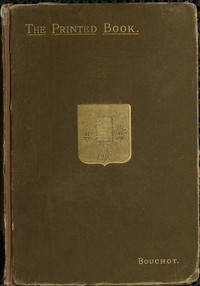
The Printed Book: Its History, Illustration and Adornment by Henri Bouchot
Let's be clear from the start: this isn't a novel. There's no fictional protagonist. The 'story' here is the epic, centuries-long adventure of the book itself. Henri Bouchot, a French bibliographer writing in the late 1800s, takes us on a tour from the very beginning. He starts with the world before printing, where books were rare, handwritten, and incredibly expensive. Then, he introduces the game-changer: movable type and the printing press.
The Story
The plot follows the book's evolution as an object. Bouchot shows how early printed books tried to look exactly like their handwritten predecessors to gain legitimacy. We then see them find their own visual voice. The real narrative is in the details: how illustration techniques evolved from woodcuts to intricate engravings, how typography became an art form, and how bookbinding transformed from simple protection into lavish decoration. The conflict is the constant push-and-pull between making books more affordable and widespread, and the desire to make them beautiful works of art. It's the story of technology, commerce, and art colliding on the page.
Why You Should Read It
I picked this up because I'm a sucker for old books—the smell, the feel, the marginalia. Bouchot gave me a whole new language to appreciate them. His passion is contagious. He doesn't just describe a 15th-century woodcut; he helps you see the craftsman's hand and the cultural moment it represents. What I love is that it's written from a pre-digital perspective. His world was still one of physical, printed pages, so his awe for the craft feels immediate and genuine. It makes you look at every book on your shelf, even a cheap paperback, with a bit more wonder, knowing the long history it descends from.
Final Verdict
This is a perfect read for curious book lovers, history enthusiasts, and anyone in design or publishing. It's for the person who visits old libraries and wonders, 'How did they make this?' Because it's from 1900, the prose has a charming, older style, but it's very readable. It's not a quick, light read; it's a book to savor in sections. Think of it as a long, fascinating conversation with a deeply knowledgeable expert who loves showing off his favorite treasures. If you've ever judged a book by its cover (and who hasn't?), this book will tell you the whole, glorious story behind that impulse.
This work has been identified as being free of known copyright restrictions. It is now common property for all to enjoy.
Joseph Martinez
2 years agoThis is now a staple reference in my professional collection.





Donald Williams
10 months agoI appreciate how this edition approaches the core problem, the case studies and practical examples provided add immense value. I'll be citing this in my upcoming project.